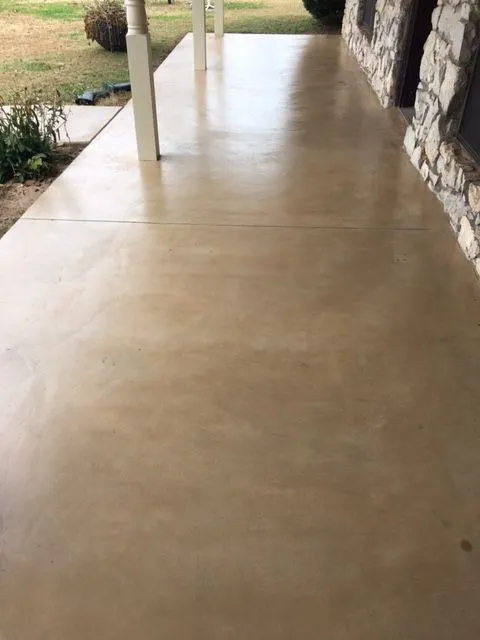
Most plain driveway and walk paving at a Nashville house does not need a building permit, but other rules still apply: stormwater, the public right of way, floodplains, historic overlays and your HOA. Outside Davidson County, each city sets its own rules. We check them for your address before we start.
Do I need a permit for a driveway or patio in Nashville?
For a driveway at a one or two family home, no building permit is listed. The Metro Department of Codes and Building Safety publishes a list of when a permit is needed, and it marks paving and driveways as no. A new patio is different. You need a permit for a patio that is more than 6 inches above average grade. New parking lot paving at other kinds of buildings does need one. Zoning, stormwater and right of way rules apply whether or not a building permit does.
Do I need a permit to widen my driveway?
Not a Metro building permit for the paving on your own lot, by the same Codes list. Two other things can still apply when you widen. If the wider drive changes the curb cut or the part that crosses the public right of way, that work needs approval from the Nashville Department of Transportation (NDOT). And if the added paving is 800 square feet or more, stormwater rules can apply, as explained below.
Who owns the driveway apron: me or the city?
The apron, the strip between the street and your property line, sits in the public right of way. NDOT controls what is built there. We could not find an official Metro page that states who pays to repair a private driveway apron, so we will not guess. In most places the owner pays for their own driveway connection and the city approves the work. Ask NDOT at 615-862-5000 or through hubNashville before replacing yours.
Who is responsible for the sidewalk in front of my house? The city sent me a notice. Can I hire my own contractor?
In Nashville, the public sidewalk in front of your house is Metro's responsibility. NDOT states that it is responsible for all aspects of the city's sidewalks, including repairing damage, and takes repair requests through hubNashville. That is unlike many cities that bill the owner. If the city sent you a notice about a sidewalk, read which department sent it and what it cites, then call that office, because it may concern something else such as overgrowth or a blocked walk. Whether you may hire your own contractor for work in the right of way is NDOT's decision and needs their permit. The walk from the public sidewalk to your door is yours.
How close to the property line can I pour? Do I need a survey?
Flat paving can often go close to the property line, but the exact limit comes from the zoning code for your lot, your plat and any easements, so we check before we form. You do not always need a survey. You do need to know where the line is. If the corner pins cannot be found and the slab is going near the line, a survey costs far less than moving concrete poured on a neighbor's land.
Do I need HOA approval?
If you have an HOA, most likely yes. Associations commonly require written approval for a wider drive, a new patio, colored or stamped finishes and walls. An HOA rule is a private contract and applies even when Metro requires no permit. Get the approval letter before you sign with a contractor.
How much of my lot can I cover with concrete?
Metro limits this through its stormwater rules, which count impervious area: roofs, drives, patios and walks. Under Metro's regulated residential infill ordinance (BL2014-910), a project that adds 800 to 15,000 square feet of net new impervious area is regulated. From 800 to 2,500 square feet it applies when the lot would be more than 30 percent impervious, and the first inch of rain from an area equal to the increase must be captured. From 2,500 square feet up it applies regardless. Metro Water Services reviews this. Your zoning district may also set its own lot coverage limit.
When does a retaining wall need an engineer or a permit?
A common code threshold is a wall over 4 feet tall measured from the bottom of the footing, or any wall holding up a driveway, a slope or a building load. We could not confirm Metro Nashville's exact wording on an official page, so treat that as the usual rule, not a quoted one. Taller walls are designed by an engineer. We confirm the requirement with Metro Codes or your city before quoting a wall.
How do I find underground utility lines before digging?
Call 811 or go to the Tennessee 811 website. It is free. Tennessee law requires at least three working days' notice before digging, and a ticket is valid for 15 calendar days after the start date on it. Each person doing the digging must have their own ticket, so when we do the work we place the request. Tennessee 811 marks public utility lines only. Private lines such as sprinklers, yard lighting and a line to a detached garage are not marked.
I need a wheelchair ramp and a wider walkway. Are there rules?
For a private home there is no single required design, but the usual guide is a ramp that rises no more than 1 inch for every 12 inches of length, with level landings and a walk at least 36 inches wide. A ramp that is raised or has handrails may need a Metro permit. A business must meet the ADA standards for its accessible route. We have no published price for ramps, so they are priced after a site visit.
My house is in a historic district or has old decorative concrete. Can I replace it?
Ask the Metro Historic Zoning Commission first. Nashville has historic and conservation zoning overlays in which exterior changes need a preservation permit, and Metro Codes points owners in those districts to the commission. We could not confirm on an official page how driveways and walks are treated in each overlay, so check for your street. Where old scored or patterned concrete matters to the look of the house, we can match joint lines and finish in the new pour.
The only real price is one written after we have measured your site. Call (615) 436-8921 or text us a photo of the area for a free on-site estimate.