Some things that worry owners about new concrete are normal, and some are real defects. This page sorts them. If the work was done by another contractor, take dated photos and raise it with them in writing before you do anything else.
Why is my new concrete already cracking? Is the contractor responsible for a crack that shows up weeks later?
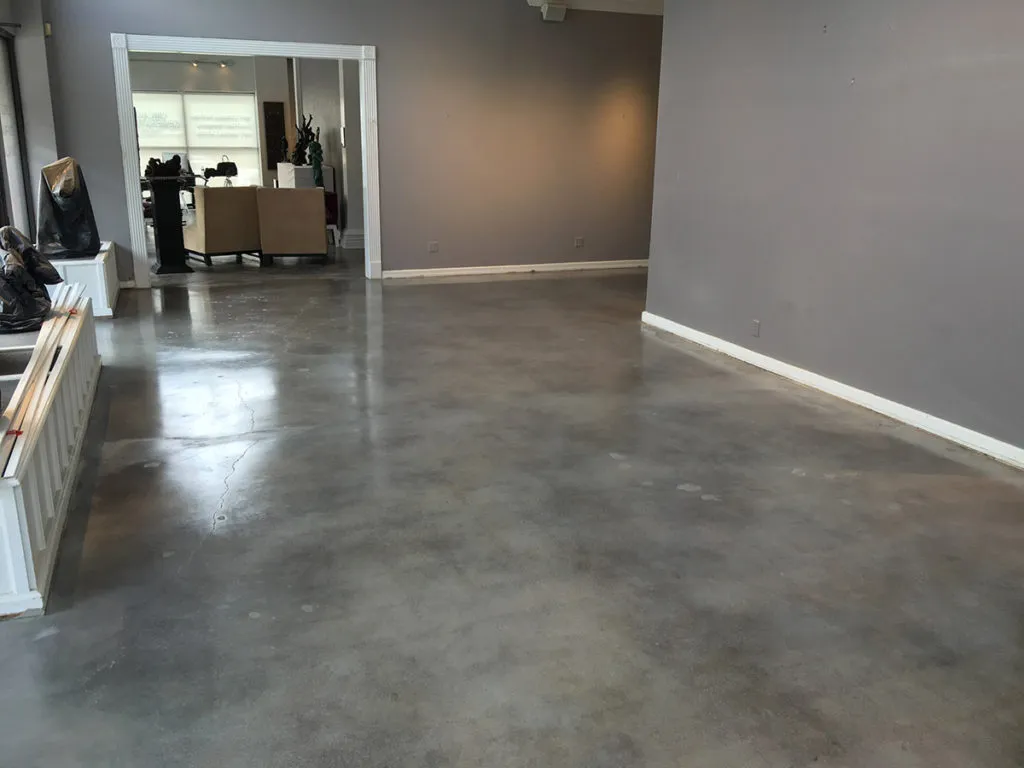
New concrete can crack in the first days or weeks because it shrinks as it dries. A fine crack that follows a joint, or one hairline across a panel, is common and not a failure. Whether the contractor is responsible depends on the cause and on your contract. Wide cracks, cracks with one side higher, or many random cracks point to a poor base, missing joints or too much water in the mix, and those are workmanship matters to put to the contractor in writing.
Why does my new concrete have dark and light patches?
Dark and light patches come from uneven drying. Shade from a tree, a tarp left on one corner, a second truck with a slightly different load, or finishing one end later than the other all leave different colors. Nashville humidity stretches this out. Most blotches fade over the first months as the slab cures. A hard line of color where two loads met usually stays.
What happens if it rains on fresh concrete?
If it rains on fresh concrete in the first few hours, the surface can be weakened and pitted. Rain after the slab has been finished and has set is harmless and even helps curing. Pop-up thunderstorms are a fact of summer here, so a crew should watch the radar and have plastic on site. If a storm did hit your pour, look for a dusty, soft or pockmarked top once it dries and ask the contractor to inspect it.
There are footprints, rough spots or a wavy finish with low spots. Is that acceptable?
No. Footprints, trowel marks and low spots that hold water are finishing defects. A broom finish should be even, and a driveway or patio should drain without puddles deeper than a coin. Pour a bucket of water on it and photograph where it stands. Small low spots can sometimes be ground or patched. A badly wavy slab may need a section replaced.
Are control joints really necessary? My contractor says he will saw-cut them a week later.
Control joints are necessary. Concrete will crack as it shrinks, and joints decide where. They should be about a quarter of the slab thickness deep and spaced roughly 8 to 12 feet apart on a 4-inch slab. A saw-cut a week later is too late, because the slab has usually chosen its own crack by then. Saw cuts are normally made within about a day of the pour, sooner in hot weather.
My slab was poured without rebar or mesh and I found out afterward. What now?
A slab poured without rebar or mesh is not automatically bad, but check what you paid for. Steel does not stop cracks. It holds them tight so the pieces stay level. On a good base, a plain 4-inch patio can perform fine. On Nashville clay or on a driveway that carries vehicles, we would want reinforcement. If your contract or quote listed steel and none went in, that is a breach to raise in writing.
What can I do if the contractor will not come back to fix it?
If the contractor will not come back, write to them with photos, the contract and a clear deadline. Keep it by email or certified mail. If that fails, you can file a complaint with the Tennessee Board for Licensing Contractors when the contractor holds or should hold a state licence, and with the Tennessee Division of Consumer Affairs. Larger disputes go to General Sessions Court or a lawyer. This is general information, not legal advice.
My new stamped concrete is slippery. Why is it also fading, cloudy or peeling?
Stamped concrete is slippery when the sealer sits on it like a film and has no grit in it. A grip additive in the next coat of sealer fixes most cases. A cloudy or white look is moisture trapped under the sealer, which happens easily in our humid weather or when sealer goes on too thick or too soon. Fading is sun and wear on the color layer. Peeling means the sealer did not bond. All three are sealer problems, and the usual cure is to strip and reseal correctly.
The surface is flaking after the first winter. Is that normal?
No. A surface that flakes in its first winter or first year points to a problem with the mix or the finish. Outdoor concrete here should be air-entrained so it can take freeze and thaw. Scaling shows up when it was not, when water was added on site, when the top was overworked, or when deicer went on a slab only a few months old. Photograph it and notify the contractor in writing.
It was poured in extreme heat and now it looks bad. What went wrong?
Concrete poured in July or August heat can set before the crew finishes it. The signs are a rough, torn surface, fine crazing like a cracked eggshell, and long thin cracks that opened the same day. Hot wind dries the top while the bottom is still wet. Crews avoid this by starting at dawn, wetting the base, working in smaller sections and curing right away. If it was skipped, the fix ranges from a resurfacer to replacement, depending on depth.
The stamped pattern is crooked and I still owe the final balance. Should I pay?
Hold the conversation before you hold the money. Tell the contractor in writing what is wrong, with photos, and ask for their plan to correct it. Many contracts tie the final payment to completion, and uneven or crooked stamping is a fair reason to say the work is not complete. Do not refuse to pay with no explanation, because an unpaid contractor may have lien rights. Agree a fix or a price reduction in writing, then pay the final balance.
The crew left ruts in the lawn, washout and splatter. Who fixes that?
Whoever your contract says, so check it. Ruts from the truck or buggy, a pile of washout where the chute was rinsed and gray splatter on siding or brick are all things a tidy crew prevents or cleans up. Splatter is far easier to remove in the first day. Ask about lawn protection and where the truck will wash out before the pour, and get the answer on the quote.
My new pad is out of level. Is that a defect?
It depends what the pad is for. Outdoor slabs are meant to slope, about an eighth to a quarter inch per foot, so rain runs off. A pad for a shed, a hot tub or a generator should be much flatter, and if you asked for level and it is visibly out of level, that is a defect. Measure it with a long level and send the numbers to the contractor.
The forms were left on and now they are stuck. What should I do?
Wood forms normally come off a day or two after the pour. If they were left for weeks, they swell and grip the slab edge. Pull the stakes first, then tap the boards down and away from the concrete, not up against the edge, which can chip it. If the contractor left them, ask them to come and strip them. Honeycombed edges showing after the forms come off can be patched.
The only real price is one written after we have measured your site. Call (615) 436-8921 or text us a photo of the area for a free on-site estimate.